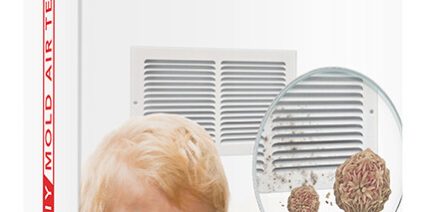
You’re standing in the aisle at Home Depot, staring at a $30 mold test kit. The box promises fast results. The label says “lab-certified.” And the price is a fraction of what a professional mold inspection would cost. It’s tempting — especially when you’ve been losing sleep over that musty smell in the hallway or the dark spot behind the bathroom vanity.
So you grab the kit, take it home, and follow the instructions. A few days later, you get results that say mold was detected. Now what? Is it dangerous? Where is it coming from? How much is there? Should you panic?
The kit can’t answer any of those questions. And that’s the problem.
DIY mold test kits and professional mold tests may sound like they do the same thing, but they are fundamentally different in what they measure, how they measure it, and — most importantly — what you can actually do with the results. If you’re a Tampa Bay homeowner trying to decide which route to take, this guide will give you the honest breakdown.
What a DIY Mold Test Kit Actually Does
Most DIY mold test kits sold at hardware stores use what’s called a settle plate method. You open a petri dish containing a growth medium, set it out in a room for 24 to 48 hours, seal it back up, and wait for mold colonies to appear. Some kits offer an optional lab analysis for an additional fee, where you mail the dish in and receive a report identifying the types of mold that grew.
Other kits include surface swabs or tape strips that you press against a suspicious spot and mail to a lab. A few higher-end options include air sampling cassettes with small pumps, which more closely resemble professional equipment.
On the surface, it sounds reasonable. But here’s the reality that kit manufacturers don’t emphasize: every home has mold spores in the air. Every single one. Mold is a natural part of the environment. It drifts in through open doors, rides in on clothing and pets, and exists at some level in every indoor space on the planet. A petri dish left open in any room — even the cleanest home in Tampa Bay — will almost certainly grow mold colonies.
So when your DIY kit comes back “positive,” what has it actually told you? That mold exists. Which you already knew. What it hasn’t told you is whether the levels in your home are abnormal, which species are present at concerning concentrations, where the mold is coming from, or whether there’s a moisture problem feeding active growth behind your walls.
What a Professional Mold Test Delivers
A professional mold test conducted by a licensed mold assessor is an entirely different process — in scope, methodology, and the quality of information it produces.
It starts before any samples are collected. A certified assessor begins with a detailed visual inspection of your property, examining moisture-prone areas like bathrooms, kitchens, HVAC closets, attics, and crawl spaces. They use professional-grade moisture meters to measure dampness trapped inside building materials and infrared thermal imaging cameras to detect hidden moisture pockets behind walls and ceilings. This diagnostic work identifies where problems exist and guides exactly where samples should be taken — something no DIY kit can replicate.
The sampling itself is calibrated and controlled. Professional air sampling uses a pump that draws a precise volume of air — typically 15 liters per minute — through a spore trap cassette. This produces a quantifiable measurement of spores per cubic meter, allowing direct comparison between rooms and against the outdoor control sample collected at the same time. That outdoor baseline is critical: it tells you what’s normal in your Tampa Bay neighborhood on that specific day so indoor results can be interpreted in context.
The lab analysis is comprehensive. Samples go to an AIHA-accredited or EMLAP-accredited third-party laboratory where trained mycologists examine them under microscopy. The report identifies every mold species present, quantifies spore concentrations for each, and compares indoor levels against the outdoor control. The result is a scientific snapshot of your home’s air quality — not a vague “positive” or “negative.”
The report is actionable. A professional mold test includes a written report with annotated photographs, moisture readings, lab results, and — if contamination is found — a remediation protocol outlining exactly what needs to happen. That document is what insurance adjusters, real estate agents, attorneys, and remediation contractors all require to move forward.
Five Things DIY Kits Cannot Do
Understanding the specific limitations of DIY kits makes the comparison even clearer.
1. They can’t measure spore concentration accurately. Settle plate kits capture whatever happens to drift onto the dish during the exposure period. They don’t control airflow, volume, or timing with any precision. The result is a qualitative “mold grew” answer, not a quantitative measurement of how much is in the air.
2. They don’t include an outdoor control sample. Without comparing indoor results to outdoor levels, there’s no way to determine whether what’s inside your home is elevated or perfectly normal. Most DIY kits skip this step entirely, making their results essentially uninterpretable.
3. They can’t find hidden mold. The most dangerous mold problems in Tampa Bay homes grow behind drywall, inside HVAC ductwork, under flooring, and in attic insulation. A petri dish sitting on your kitchen counter has zero ability to detect contamination in any of those locations. Professional assessors use infrared imaging, moisture meters, and in-wall cavity sampling to find growth where it actually hides.
4. They can’t identify the moisture source. Mold is always a moisture problem first. If you don’t find and fix the water source — the leaking pipe, the condensation in the air handler, the roof intrusion — the mold will come back no matter how many times you clean it. Professional testing includes a moisture assessment that DIY kits don’t even attempt.
5. They don’t produce documentation that matters. DIY test results are not accepted by Florida insurance carriers for mold damage claims. They won’t satisfy a buyer’s due diligence during a real estate transaction. And they carry no weight in legal disputes. Only reports from licensed, independent mold assessors using accredited laboratories meet the documentation standards that actually protect you.
The Hidden Cost of the “Cheaper” Option
DIY mold test kits typically cost $10 to $50, with optional lab fees adding another $30 to $150. A professional mold inspection in Tampa Bay runs between $300 and $800. The price difference seems significant — until you consider what happens after the results come in.
Many homeowners buy a DIY kit, get confusing or alarming results, and then hire a professional anyway. Now they’ve spent money on both. Others get a false negative — the kit misses a real problem — and allow hidden contamination to spread for months, turning what could have been a manageable repair into a multi-thousand-dollar remediation project.
The most expensive mold problem isn’t the one you find early. It’s the one you miss because you relied on a tool that wasn’t designed to find it.
When a DIY Kit Might Make Sense
To be fair, there are limited situations where a consumer-grade test has some value. If you’re curious about general air quality but have no specific symptoms or concerns, a higher-end DIY air sampling kit with lab analysis can provide a rough baseline. If you have clearly visible mold on a surface and simply want to confirm the species before cleaning a small area yourself, a surface swab kit with lab analysis can give you that answer.
But for any situation involving hidden mold, health symptoms, water damage, insurance claims, real estate transactions, or contamination that may exceed ten square feet, professional testing isn’t just the better option — it’s the only one that provides the information you actually need.
The Bottom Line
DIY mold test kits and professional mold tests are not the same — not in accuracy, not in scope, and not in what you can do with the results. A $30 kit tells you mold exists, which was never really in question. A professional assessment tells you what species are present, whether levels are elevated, where the moisture source is, and exactly what to do about it.
In Tampa Bay’s humid climate, where mold can colonize wet materials within 48 hours and spread silently through your home, the question isn’t whether you can afford professional testing. It’s whether you can afford the consequences of skipping it.