By Joe Margherita, FL Licensed Mold Assessor MRSA4534, ACAC Certified Indoor Environmentalist
Here’s the direct answer: yes, most Florida homeowners’ insurance policies cover mold — but only under specific conditions, and almost always with a cap that’s lower than most people expect. Understanding those conditions before you file a claim can mean the difference between full coverage and paying for remediation out of your own pocket.
I’ve provided mold assessment reports for hundreds of insurance claims across Tampa Bay. I’ve seen claims approved quickly because the documentation was strong, and I’ve seen valid claims denied because the homeowner didn’t have the right evidence in the right format. The coverage rules aren’t complicated, but the details matter — and the documentation you provide matters even more.
What Florida Law Says About Mold Coverage
Florida Statute 627.7073 governs how insurance companies handle mold in homeowners’ policies. Under this statute, insurers may limit mold remediation coverage — and most do. The standard cap on most Florida policies falls between $10,000 and $25,000 per occurrence, regardless of how much your dwelling is insured for. Some carriers offer optional endorsements that increase mold coverage to $25,000 or $50,000, but homeowners have to specifically request and pay for that upgrade.
The critical principle behind every mold claim is this: your policy doesn’t cover mold as a standalone event. It covers mold as a consequence of a covered peril — meaning the water damage that caused the mold must itself be a covered event under your policy. The mold coverage flows from the water damage, not the other way around.
What’s Typically Covered
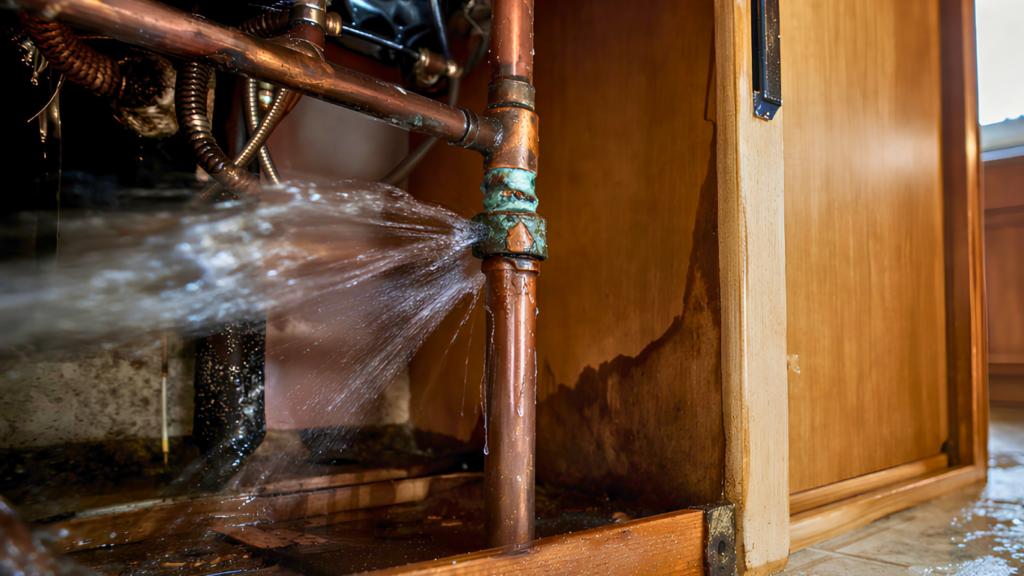
Mold resulting from sudden, accidental water events that your policy covers is generally eligible for mold coverage. The most common covered scenarios I see in Tampa Bay include a pipe that bursts inside a wall and saturates drywall and framing before the homeowner discovers it, a water heater or washing machine that malfunctions and floods a room, hurricane or windstorm damage that compromises the roof and allows rain to enter the structure, and an air conditioning system that fails and causes condensation or overflow that saturates building materials.
In each of these situations, the key factor is that the water event was sudden, accidental, and covered under the policy. If the mold is a direct result of that event, coverage typically applies — subject to your policy’s mold sublimit and deductible.
What’s Typically NOT Covered
This is where most Tampa Bay homeowners run into problems. Several common mold scenarios fall outside standard coverage.
Gradual leaks are the most frequent exclusion. A slow drip under a sink that goes unnoticed for months, a toilet seal that’s been seeping for years, or a shower pan that’s been leaking behind the wall since the house was built — insurers classify these as maintenance issues, not covered perils. If the leak was gradual rather than sudden, the resulting mold is almost always excluded.
Humidity and condensation are excluded. In Tampa Bay, where indoor humidity routinely exceeds 60 percent during summer, mold caused by inadequate climate control, poor ventilation, or chronic condensation is considered a maintenance responsibility, not an insurable event.
Flood damage requires separate coverage. Mold caused by rising water, storm surge, or flooding is not covered under a standard homeowners policy. You need a separate flood insurance policy for that — and even then, mold coverage under flood policies has its own limitations.
Neglect and deferred maintenance are grounds for denial. If an adjuster determines that the homeowner knew about a water problem and failed to address it promptly, the claim can be denied on the basis of neglect. Florida courts have upheld this exclusion consistently.
Why Your Mold Assessment Report Is the Most Important Document in the Claim
Here’s where my role as an independent mold assessor directly impacts whether your claim succeeds or fails.
When you file a mold claim, your insurance adjuster needs to determine three things: what type of mold is present, what caused it, and whether that cause is a covered peril under your policy. The document they use to make that determination is your mold assessment report.
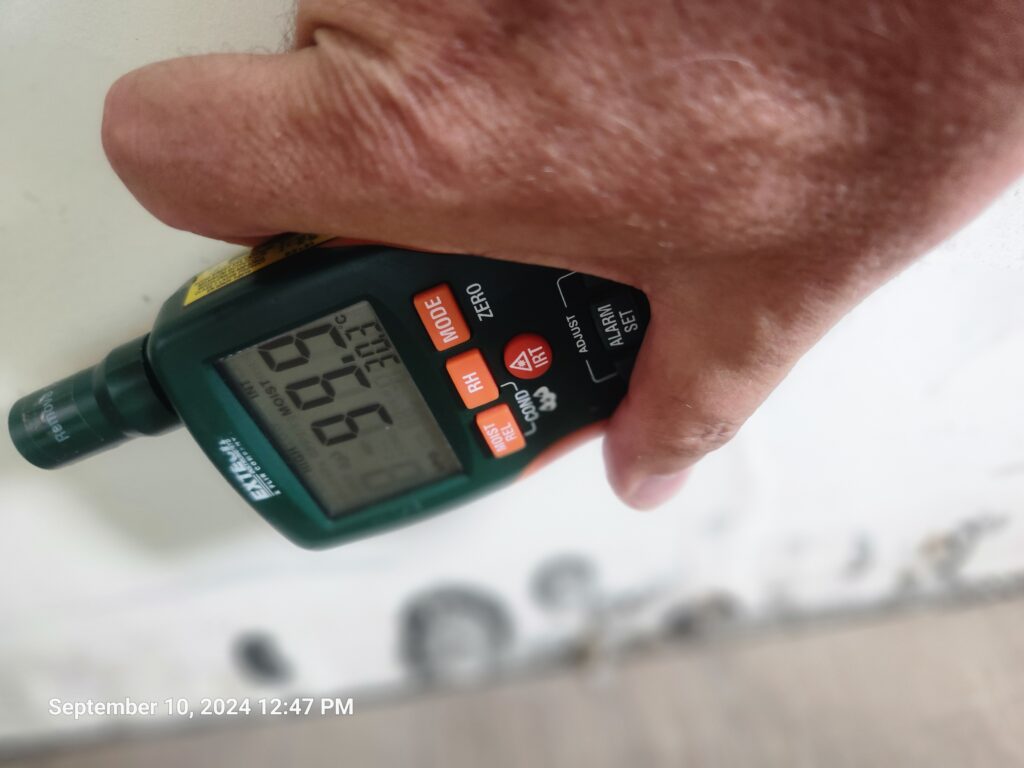
A strong report from a licensed mold assessor provides lab results identifying the exact mold species and spore concentrations, an outdoor baseline comparison showing that indoor levels are elevated, moisture readings and infrared imaging documenting the location and extent of water intrusion, photographic evidence of damage, and a professional interpretation connecting the mold to the water event.
This documentation creates the evidentiary chain your adjuster needs: a covered water event occurred, it caused moisture intrusion in specific locations, that moisture led to mold growth of identified species at documented concentrations, and remediation is needed at a defined scope. Without that chain, the adjuster has grounds to deny or reduce the claim.
A weak report — or no report at all — leaves the adjuster to make their own determination, which rarely favors the homeowner. I’ve seen claims denied because the homeowner called a remediation company first and the mold was removed before any independent documentation existed. Once the mold is gone, there’s no lab data, no species identification, no spore counts, and no way to prove what was there or what caused it.
Why Independence Matters for Insurance Claims
This is a point I cannot stress enough: your mold assessment should come from an independent, licensed assessor who does not also perform remediation. Florida law separates these roles for a reason, and insurance adjusters know the difference.
When a remediation company provides the assessment and the cleanup, the adjuster has reason to question whether the findings were influenced by the financial incentive to sell a larger remediation project. An independent report from a licensed assessor who has no stake in the remediation carries significantly more weight — with adjusters, with attorneys, and in any dispute that follows.
Every report I produce is designed to stand up to scrutiny. I have no remediation contracts to sell, no financial interest in inflating findings, and no relationship with the cleanup company you choose to hire. My only job is to document what’s there accurately — and that objectivity is what makes the report defensible.
Steps to Protect Your Claim Before You Call Your Insurer
- Stop the water source immediately. If you can identify the source, shut it off. A burst pipe should be shut off at the main, leaking appliances disconnected, and standing water extracted. Insurers expect you to mitigate further damage; failure to act promptly can be used as grounds for denial.
- Document everything with photos and video. Do this before you clean, move, or remove anything. Capture the water source, the affected areas, and any visible damage from multiple angles to preserve the scene for your adjuster.
- Call your insurance company to report the loss. Florida Statute 627.70131 requires insurers to acknowledge your claim within 14 days and begin an investigation promptly. Report early, even if you are not entirely sure of the extent of the damage.
- Schedule an independent mold assessment. Do this before hiring a remediation or dry-out company. An independent assessment documents conditions exactly as they exist—identifying species, spore counts, moisture levels, and the critical connection to the water event. This report becomes the foundation of your claim.
- Do not begin remediation until the assessment is complete. Removing mold or tearing out drywall before it is professionally documented permanently eliminates the physical evidence you need to support your insurance claim.
The Bottom Line
Does homeowners’ insurance cover mold in Florida? In most cases, yes — when the mold results from a sudden, covered water event and you have the documentation to prove it. The coverage is limited, the exclusions are real, and the claims process favors homeowners who come prepared with professional evidence.
An independent mold assessment from a licensed assessor gives you that evidence. It’s the single most important step between discovering a mold problem and getting your insurance company to pay for it.
Joe Margherita FL Licensed Mold Assessor MRSA4534 ACAC Certified Indoor Environmentalist
Tampa Bay Mold Testing (813) 365-1994