
By Joe Margherita, FL Licensed Mold Assessor MRSA4534, ACAC Certified Indoor Environmentalist
If you’ve just painted, installed new flooring, brought in new furniture, or finished a renovation, and the house smells “off” – that smell is most likely VOCs, not mold. New paint, adhesives, and flooring off-gas volatile organic compounds for weeks after installation. The resulting symptoms—like headaches, irritation, and brain fog—genuinely overlap with mold exposure.. Trying to tell the difference between a VOC vs mold smell can be frustrating, which is exactly why I get asked to sort it out.
I’ve spent 27 years assessing indoor air quality across the Tampa Bay area, including VOC testing alongside mold work. Here’s what VOCs actually are, why the symptoms feel so similar to mold, how to tell the two apart, what actually helps while a space off-gasses, and when it’s worth testing to find out for sure.
The short answer: VOC vs mold smell at a glance
- New paint, flooring, cabinetry, adhesives, and furniture release VOCs (volatile organic compounds) for weeks to months after installation — the “new” smell is largely chemical, not biological.
- VOC exposure symptoms – headache, eye/throat irritation, dizziness, fatigue – closely overlap with mold exposure symptoms, which is the main reason the two get confused.
- Ventilation and time reduce VOC levels significantly; most off-gassing fades substantially within weeks to a couple of months.
- When comparing a VOC vs mold smell, a sharp, chemical, ‘new’ odor points toward VOCs, while a musty, earthy, damp odor points toward moisture and mold.
- Florida’s near-constant AC use recirculates indoor air rather than exchanging it with fresh outdoor air, which can trap VOCs indoors longer than in a naturally ventilated climate.
- A VOC air test can identify specific compounds, quantify total VOC levels against a recognized benchmark, and distinguish construction-related sources from things like cleaning products or air fresheners.
What VOCs actually are, and where they come from
VOCs — volatile organic compounds — are chemicals that evaporate into the air at room temperature. Nearly every material used in construction and furnishing a home off-gasses them to some degree:
- Paint, varnish, and coatings — the classic “fresh paint” smell, often lingering for weeks or even months after application.
- Adhesives, caulks, and sealants** used in flooring, cabinetry, and trim work.
- New flooring** — vinyl, laminate, and some engineered wood products, along with the adhesives used to install them.
- New furniture and cabinetry** — finishes, foam, and pressed-wood components.
- Cleaning products, air fresheners, and personal care products, a separate, occupant-driven source rather than a construction-driven one, and often the actual cause when a house smells “chemically” without any recent renovation at all.
None of this is unusual or a sign that something went wrong. It’s a normal, expected part of how these materials cure and settle. The real question is how long it lasts and whether it’s actually behind your symptoms. The EPA notes that concentrations of many VOCs run consistently higher indoors than outdoors. They can spike even higher during and shortly after activities like painting. This is exactly why ventilation matters so much (see the ‘what actually helps’ section below).
Why the symptoms get confused with mold
This is the part that trips almost everyone up. Both VOC exposure and mold exposure can cause:
- Headaches
- Eye, nose, or throat irritation
- Coughing or a scratchy throat
- Fatigue or a “foggy” feeling
- Worsened symptoms for anyone with asthma or chemical sensitivities
Because the symptom list is nearly identical, people who just renovated and feel lousy in their own home often jump straight to “it must be mold” — when in a lot of cases, especially in the weeks right after a renovation, VOCs are the more likely explanation. The reverse also happens: people assume a lingering odor is ‘just the new paint.’ Because a VOC vs mold smell can be difficult to distinguish, they completely miss a moisture problem that started around the same time purely by coincidence
Diagnostic Guide: VOC vs mold smell
Signs it is more likely VOCs:
- The smell is sharp, chemical, or “new” — like paint, glue, or plastic.
- It started right after painting, flooring installation, new furniture, or a renovation.
- It’s gradually fading week over week.
- There’s no visible discoloration, staining, or dampness anywhere nearby.
When to suspect mold instead:
- The smell is musty, earthy, or damp — not chemical.
- It’s not tied to any recent renovation or new materials.
- It’s getting worse over time, or staying constant, rather than fading.
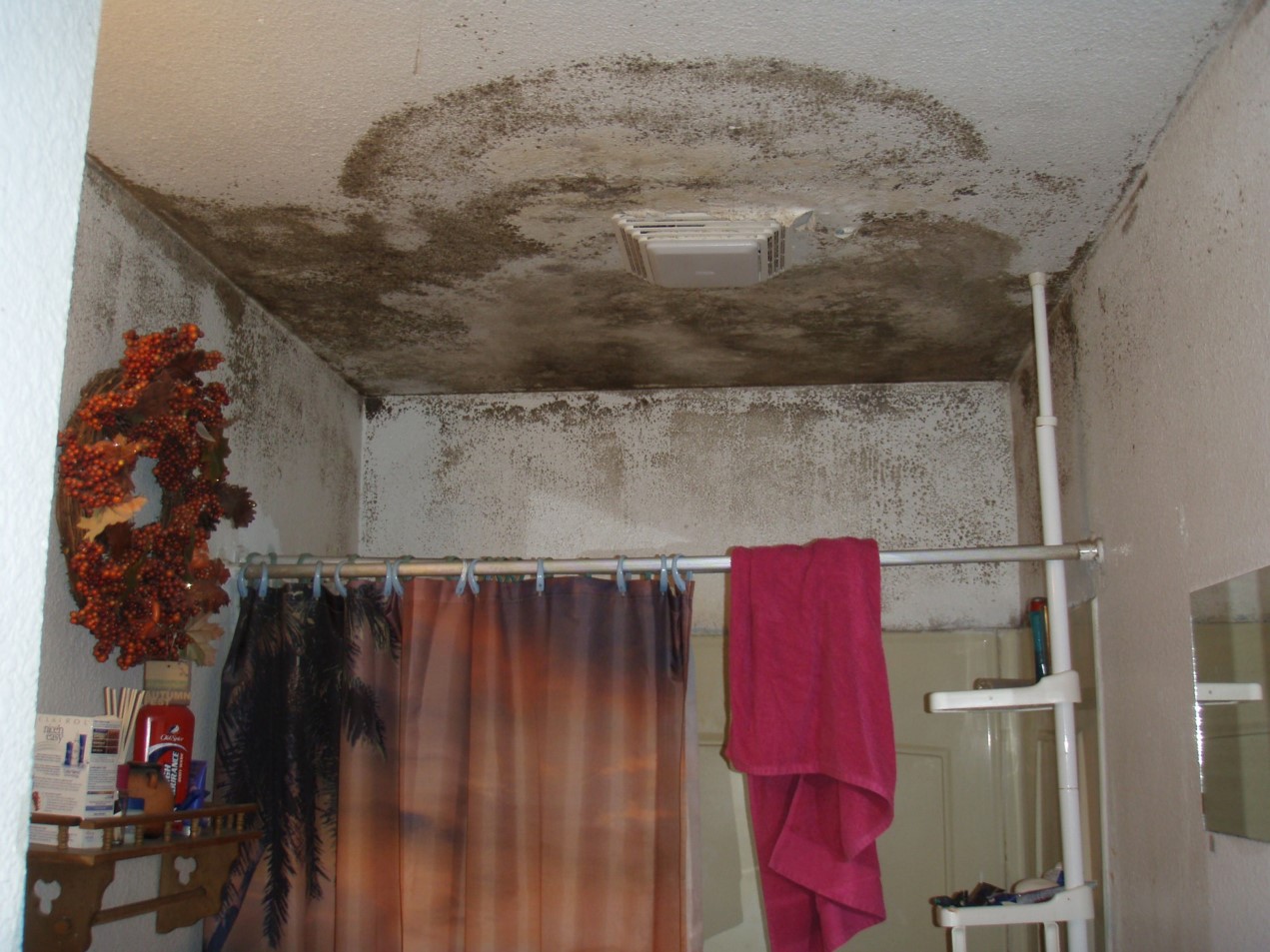
- There’s visible discoloration, a known past leak, or a humid, poorly ventilated area nearby (such as bathrooms, closets, under sinks, or attics).
Situations that need a closer look:
- The smell and symptoms persist well beyond the timeframe you’d expect for off-gassing (more than a couple of months).
- Household members with asthma, chemical sensitivities, or respiratory conditions are having a hard time.
- You genuinely can’t tell which one it is — which is common, and exactly what testing is for.
If what you’re actually noticing is a musty smell tied to a specific damp room rather than a whole-house chemical smell, our [bathroom ceiling mold guide] walks through that diagnosis in more detail — it’s a common source of exactly this kind of confusion.
Why Florida traps VOCs longer than other climates
In a lot of the country, homes naturally exchange indoor and outdoor air — windows get opened, doors get left ajar, the HVAC system isn’t running nonstop. That natural air exchange is one of the main ways off-gassing VOCs actually leave a house.
Florida doesn’t work that way for most of the year. Central AC runs nearly continuously because of the heat and humidity, and most residential AC systems are designed to recirculate indoor air, not bring in a meaningful volume of fresh outdoor air the way an energy recovery ventilator (ERV) system would. TFlorida homes typically keep windows shut and the AC running around the clock. This leaves fewer natural opportunities to vent out VOCs compared to milder climates
Tampa Bay is also experiencing a massive renovation and new-construction boom. As a result, many homes have fresh paint and new flooring trapped inside an AC system that doesn’t pull in fresh air. It’s not a defect in the home — it’s just a climate and HVAC reality worth knowing, especially if you’re trying to diagnose a VOC vs mold smell and wondering why it isn’t going away as fast as it should.
What a VOC test actually shows you
A VOC air test doesn’t just tell you “yes, there are chemicals in the air” — a properly run test gives you a structured, specific picture. (If you haven’t already, our [indoor air quality testing guide](https://tampabaymoldtesting.com/services/indoor-air-quality-testing/) covers how VOC testing fits alongside mold and other IAQ testing more broadly.)
A single Total VOC (TVOC) number
Reported in nanograms per liter (ng/L), placed on a color-coded scale from Normal to Severe. It’s worth knowing upfront that no government agency has set a legal indoor TVOC limit — the commonly used “under 500 ng/L” benchmark comes from the U.S. Green Building Council, not a regulatory body, so it’s a helpful reference point rather than a pass/fail line.
A breakdown between Building Sources and Occupant Sources.
This is the single most useful part of the report for exactly the question this post is about. Building Sources — coatings, adhesives, light hydrocarbons — point toward construction and renovation materials. Occupant Sources — cleaning products, fragrances, personal care products — point toward things you brought into the house yourself. Seeing which category is actually elevated tells you whether the smell is genuinely tied to your renovation or coming from somewhere else entirely.
A list of the specific compounds detected
With plain-language descriptions of where they typically come from. A report might show something like acetone (personal care products, paints and coatings, adhesives), limonene (fragrances, cleaning products — often just an air freshener, not a hazard), or isobutane (aerosol propellants, refrigerants) — actual named sources instead of a vague “chemicals present” finding.
A hazardous air pollutants (HAP) supplement
Comparing any detected compounds — things like toluene — against established NIOSH occupational exposure limits. This is where a report gives you real context: a trace detection sitting nowhere near a health-relevant threshold is a very different finding than the same compound at a concentration approaching that limit, and an honest report shows you both numbers rather than just flagging “detected” and leaving you to wonder.
What actually helps while VOCs off-gas
The single most effective thing you can do costs nothing: ventilation. Cross-ventilating dilutes concentrated VOCs faster than anything else. Simply open windows on opposite sides of the affected room. This is especially crucial right after painting, flooring installation, or the delivery of new furniture.It is also the exact principle the EPA recommends: reduce the source first, then ventilate with clean outdoor air before buying equipment.
Time is the other half of the equation. Off-gassing isn’t permanent. Most materials release the bulk of their VOCs in the first days to weeks. The odor then tapers off substantially over the following month or two. A smell that’s fading week over week is behaving exactly as expected. A smell that isn’t fading is the signal something’s off.
If you want equipment as a supplement, the technology matters more than the brand. You must understand this regardless of what you buy. A plain HEPA filter only removes particles like dust, pollen, and mold spores. VOCs are gases, and they pass straight through HEPA media untouched. Removing VOCs requires an activated carbon filter (or similar gas-phase media). The EPA’s consumer guidance is highly specific about this. The filter must actually be designed to adsorb gases. Furthermore, thicker carbon beds perform meaningfully better than thin ones. Some units combine HEPA and activated carbon in one system. Others handle only one or the other. Always check the specification sheet. Do not assume an ‘air purifier’ automatically removes VOCs. automatically means “removes VOCs.”
A few honest caveats worth knowing before you shop, regardless of what you choose:
- Ozone generators and some “ionizing” air purifiers are not the same thing as filtration, and the EPA specifically cautions against them — ozone itself is a lung irritant, so a device that generates it to “clean” the air can add a pollutant rather than remove one.
- There’s no independent, standardized test that rates how well a given unit specifically removes VOCs (unlike CADR, which measures particle removal). Manufacturer claims vary widely, so a specific activated-carbon weight or volume spec is a more useful data point than marketing language on the box.
- An air purifier is a supplement to source control and ventilation, not a substitute for them – it can reduce the concentration already in the air, but it won’t stop a material that’s still actively off-gassing from continuing to add more.
We don’t sell or install air purification equipment, so we don’t have a specific product to point you toward — but if you want to go deeper before shopping, the EPA’s Guide to Air Cleaners in the Home is a neutral, non-commercial resource that covers what to look for.
When it’s worth testing for a VOC vs mold smell
Testing earns its cost when the picture is genuinely unclear rather than obvious. That usually means:
- The smell and any symptoms are persisting well past the timeframe you’d expect from normal off-gassing.
- You can’t distinguish between a VOC vs mold smell – which is common, especially when a renovation and a moisture issue happen to overlap in timing.
- A household member with asthma, chemical sensitivities, or a compromised immune system is struggling, and you want documented answers rather than guesses.
- You’re buying or selling a home and need lab-verified results rather than a visual opinion.
- You want to confirm that a “chemical smell” complaint is actually construction-related (Building Sources) rather than something like an air freshener or cleaning product (Occupant Sources) before spending money addressing the wrong thing.
If the smell is fresh, fading, and clearly tied to something you just installed or painted, you likely don’t need to spend money confirming what’s already obvious. Testing is most valuable when it resolves genuine uncertainty or when documented results matter for a transaction or a health concern.
Frequently asked questions about a VOC vs mold smell
How long does new paint or new flooring smell last?
Most VOC off-gassing is heaviest in the first few days to weeks and then tapers off substantially over the following one to two months. A smell that’s clearly fading week over week is behaving as expected; one that isn’t fading after a couple of months is worth a closer look.
Can a new house or renovation make you sick?
VOC exposure can cause headaches, eye and throat irritation, dizziness, and fatigue, especially at higher concentrations right after painting, flooring work, or new furniture. Symptoms typically improve as ventilation and time reduce VOC levels. Anyone with asthma, chemical sensitivities, or respiratory conditions may be more affected and should pay closer attention to symptoms that don’t improve.
How do I tell the difference between a VOC vs mold smell?
A sharp, chemical smell associated with something you just installed or painted, that fades over time, points to VOCs. A musty, earthy smell that isn’t tied to a renovation and isn’t getting worse, points to mold. When it’s genuinely unclear, a VOC test and a mold inspection can each rule in or out what’s actually present.
Does opening windows actually help with VOC smell?
Yes — cross-ventilation is the fastest, most effective, and free way to reduce indoor VOC concentrations, especially in the days right after painting or installing new materials. In Florida homes that run AC nearly year-round, this natural air exchange happens less often on its own, so it’s worth doing deliberately during and after any high-VOC activity.
Do air purifiers remove VOCs?
Only certain kinds. Standard HEPA filters remove particles, not gases, and VOCs pass straight through them. Removing VOCs requires an activated carbon filter (or similar gas-phase media). The EPA’s consumer guidance is highly specific about this. The filter must actually be designed to adsorb gases. Furthermore, thicker carbon beds perform meaningfully better than thin ones. Ventilation and time remain the primary, no-cost solutions; a properly equipped purifier is a supplement, not a replacement.
—
*Indoor air quality and its potential health effects can be sensitive subjects, and every property is different. This article is general information, not a diagnosis of your specific home or health. If you have health concerns you believe may be related to your indoor environment, speak with a medical professional.*
Joe Margherita FL Licensed Mold Assessor MRSA4534 ACAC Certified Indoor Environmentalist