
By Joe Margherita, FL Licensed Mold Assessor MRSA4534, ACAC Certified Indoor Environmentalist
Most bathroom ceiling mold comes from one thing: shower steam and humidity condensing on a cool ceiling that doesn’t get a chance to dry out. A small patch directly over the shower is usually a manageable problem you can clean yourself and keep away by fixing the ventilation. But here in Florida, bathroom ceiling mold is both more common and stubborn than up north. If it keeps coming back after multiple scrubbings, that’s your sign it isn’t simple shower steam anymore.
I’ve spent 27 years inspecting homes across the Tampa Bay area, and bathroom ceilings are one of the first places I look. Here’s why they grow mold, why Florida makes it worse, how to handle a small patch yourself, and how to tell when what you’re actually looking at is a leak.
The short answer: bathroom ceiling mold, at a glance
- Bathroom ceiling mold is most often caused by shower steam and humidity condensing on a cool ceiling in poorly ventilated bathrooms.
- A small surface patch can usually be cleaned and then prevented by improving airflow; larger or recurring growth needs a closer look.
- Most black-colored bathroom ceiling mold is not the toxic “black mold” people fear — it’s commonly Cladosporium or Alternaria, not Stachybotrys.
- In Florida, bathroom ceiling mold is worse because high humidity keeps ceilings damp year-round. Also, many exhaust fans mistakenly vent into the attic.
- Mold might return quickly after cleaning or spread beyond the shower. This often points to a roof or plumbing leak rather than steam
- Bathroom mold most often causes allergy-type and respiratory irritation; serious illness from it is rare.
- Not every spot needs lab testing — if the cause is obvious and the fix is simple, cleaning and improving ventilation is usually enough.
Why bathroom ceilings are mold magnets
A bathroom ceiling is the perfect setup for mold. It provides the exact recipe needed: moisture, a food source, and still air.
Every hot shower fills the room with steam, and that warm, moisture-saturated air rises and hits the ceiling first. Ceilings are usually the coolest surface in the room since they sit just below an air-conditioned space or an attic. This is especially true in older homes or bathrooms lacking a properly sized exhaust fan. Warm, humid air meeting a cooler surface is exactly how condensation forms. That thin film of moisture is all mold spores, which are present in essentially every home’s air, need to take hold.
The “food” part is easy to overlook. Mold doesn’t need wood or drywall specifically – it can grow on the dust, skin cells, and soap film that settle on a painted ceiling over time. This is why a ceiling without a leak can still develop surface mold. It simply needs to stay damp long enough.
Cleaning it yourself: what actually works
Sometimes the patch is small and confined directly above the shower. If this is the first time you’ve noticed it, this is usually a DIY job. You likely do not need a professional inspection yet.
What to use:
- White vinegar** (undiluted, in a spray bottle) is effective on painted drywall and is gentle enough not to damage most ceiling paint. Spray it on, let it sit for about an hour, then wipe.
- A hydrogen peroxide solution** works similarly and is a good alternative if you don’t want the vinegar smell lingering.
- Bleach is excellent on hard, non-porous surfaces like tile and grout. However, a painted ceiling is porous. Bleach often just removes the visible color instead of killing the mold growing into the drywall paper underneath. If you insist on using bleach, dilute it to roughly 1 cup per gallon of water and ventilate the room well. Just understand you may only be treating the symptom rather than the root cause.
- Bleach-free bathroom cleaners sometimes work the best. They have no odor and remove the staining.
After cleaning, the fix that actually matters is the ventilation, not the cleaning product.Your exhaust fan must be powerful enough and run long enough. If not, the ceiling will simply get recolonized. Run the fan during every shower and for a full 20–30 minutes afterward. A cheap humidity-triggered fan switch or a simple timer switch will do this automatically if you don’t trust yourself to remember.
The EPA notes that damp bathrooms are hard to keep completely mold-free. If mold keeps reappearing, increasing ventilation is key. Cleaning more frequently will also help prevent or minimize recurrence.
Why Florida makes this worse
Florida bathrooms barely get a chance to dry out. Up north, a bathroom ceiling naturally dries out between humid spells. Here, ambient humidity stays high for over nine months a year. Because of this, the ceiling stays damp much longer after every single shower.
There’s a second Florida-specific factor: the temperature split between an air-conditioned ceiling and a blazing hot attic just above it. That gap makes the ceiling a condensation surface from both directions — cool air below, heat and moisture pressure from above.
But the biggest one, and the one I see missed constantly in Tampa Bay homes, is this:
Many bathroom exhaust fans in Florida vent into the attic rather than outside through the roof.
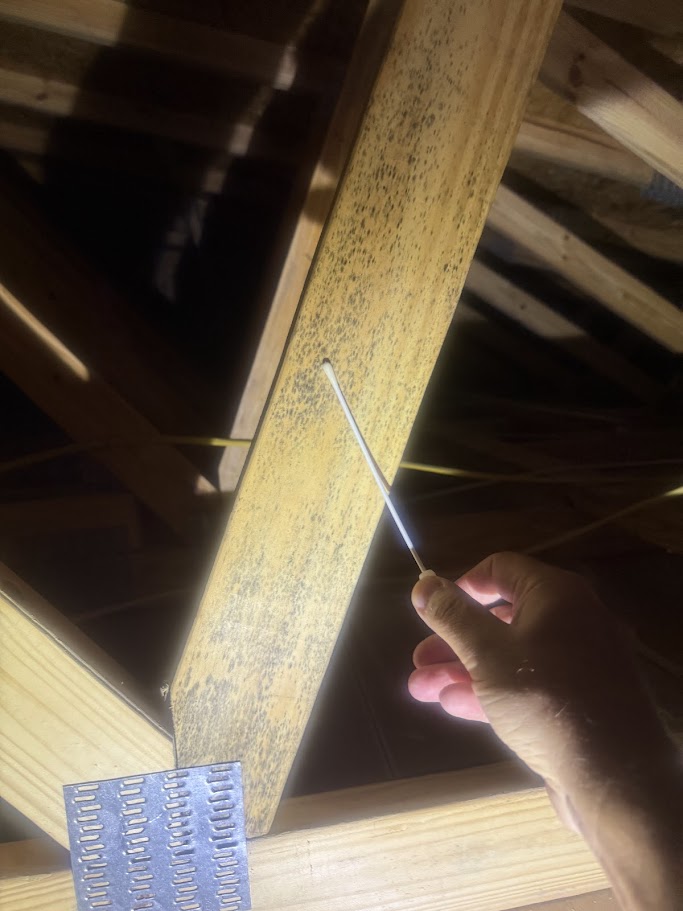
That fan isn’t actually removing moisture from your house. It’s just relocating it into a hot, poorly ventilated attic. The moisture condenses on the top of your ceiling drywall, then works its way back down as a new mold patch. A homeowner cleans the spot, it comes back in a few weeks, and they never realize the fan itself is quietly causing the problem. If you’ve cleaned the same ceiling mold more than once, checking where that duct actually terminates is worth doing before you buy another bottle of cleaner.
On prevention, CDC recommends using exhaust fans in the kitchen and bathroom that vent to outside the home as one of the core steps to prevent mold growth.
Steam, leak, or attic condensation: the three-way diagnostic
Not all bathroom ceiling mold has the same cause, and the cause determines whether this is a cleaning job or an inspection job. Here’s how I sort it out on a job site:
Signs it’s just shower steam:
- The mold is confined to the area directly above or immediately around the shower/tub.
- It’s a thin, surface-level discoloration, not a raised or textured patch.
- There’s no discoloration, sagging, or bubbling of the paint.
- It’s the first time you’ve noticed it, or it responds and stays gone after cleaning plus improved ventilation.
When a plumbing or roof leak is the culprit:
- Stains or growth is off to one side, away from the shower area, or runs along a specific line (such as following a pipe run or a roof valley).
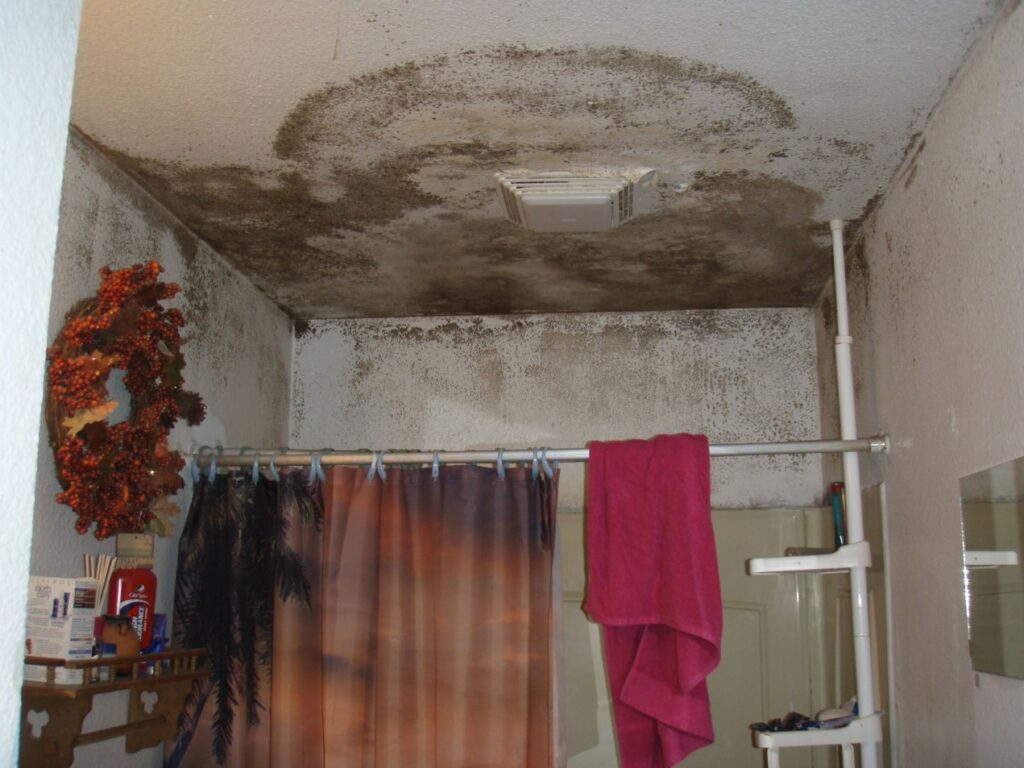
- Ceiling paint is bubbling, sagging, soft, or discolored in a ring pattern — a classic sign of an active or repeated water intrusion.
- The mold returns within days or a couple of weeks of cleaning, even with the fan running properly.
- It shows up after storms or heavy rain, which points toward a roof or flashing issue rather than daily shower use.
It’s likely attic condensation from a misrouted exhaust fan if:
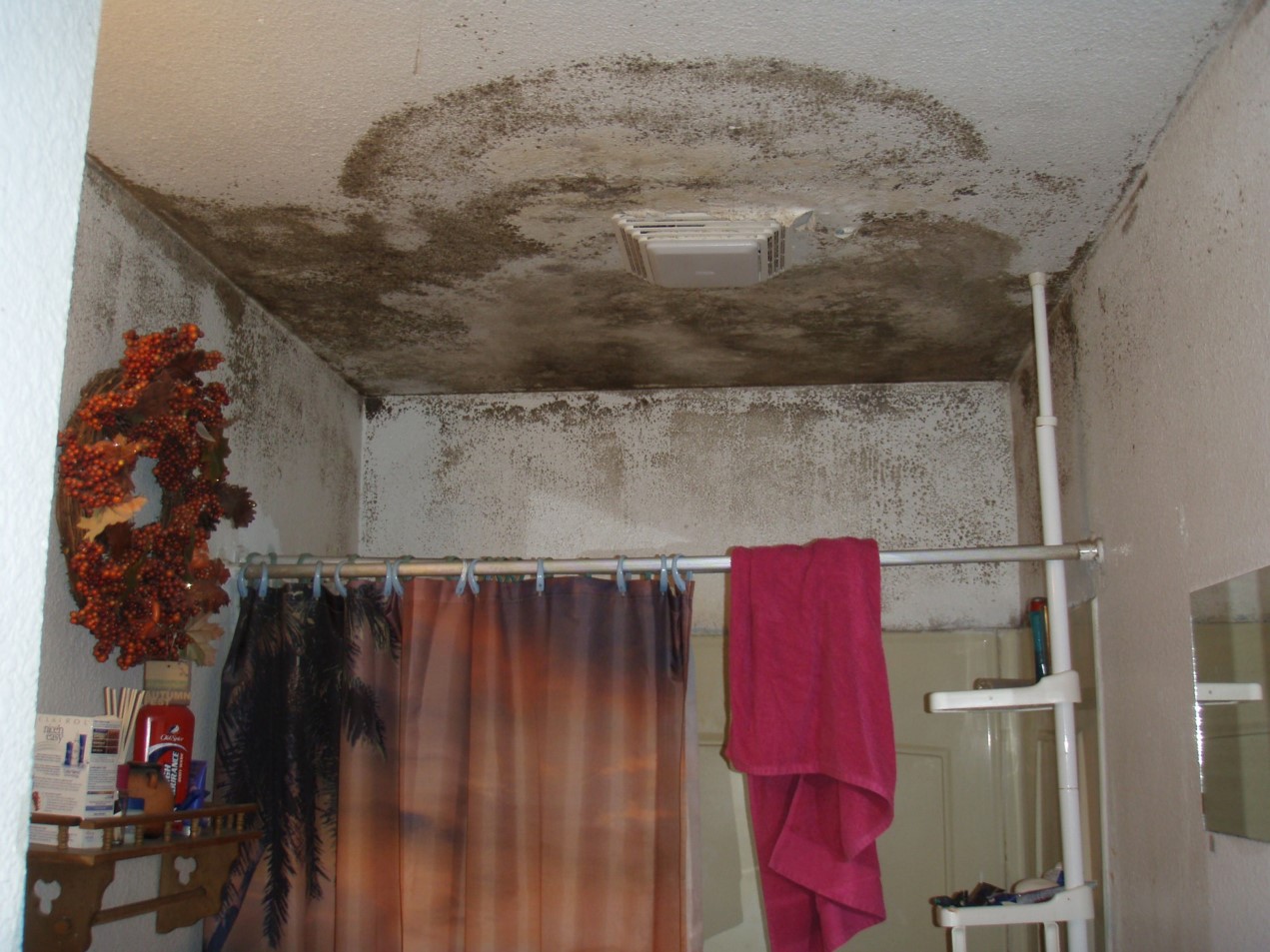
- The growth is spread more broadly across the ceiling, not concentrated over the shower.
- It’s worse in summer, when the attic-to-room temperature gap is largest.
- You’ve addressed shower ventilation and the mold still returns.
- You can’t confirm your bathroom fan vents outside (this is worth physically checking — from the attic or on the roof/soffit — rather than assuming).
If you land in the second or third category, that’s when I’d recommend a professional mold inspector look rather than another round of cleaning. Recurring growth from a hidden leak or a misrouted fan won’t resolve with better scrubbing — it needs the moisture source found and fixed.
Is it toxic “black mold”?
This is the question I get asked more than any other, and the honest answer is: probably not. Black-colored mold on a bathroom ceiling is usually Cladosporium or Alternaria. These are common, allergenic molds that cause mild irritation. They are not associated with the severe toxin production of Stachybotrys chartarum, the notorious ‘toxic black mold.” Color alone can’t tell you the species; that requires lab analysis. But the appearance of black mold on a bathroom ceiling, by itself, is not a reason to panic — it’s a very common, very treatable condition in Florida homes.
When you don’t need to test bathroom ceiling mold
I’ll say this plainly, because it’s the honest answer and not the profitable one: most small bathroom ceiling mold problems don’t need a lab test. Sometimes the patch is small, confined above the shower, and responds well to cleaning. In these cases, you don’t need to spend money confirming what’s already clear For example, the mold might keep returning despite a good fix. You might also suspect a hidden leak you can’t visually confirm. Finally, real estate transactions and health concerns often require documented, lab-verified results rather than just a visual opinion.
When to call a professional
Bring in an inspection if:
- The mold keeps returning after cleaning and improved ventilation.
- The growth extends beyond the immediate shower area.
- You see ceiling staining, sagging, or bubbling paint alongside the mold.
- You suspect a roof or plumbing leak but can’t confirm the source yourself.
- You have unexplained respiratory symptoms tied to time spent in that bathroom.
- You’re buying or selling a home and need documented, lab-verified findings.
As an independent mold assessor, I don’t sell remediation — Florida Statute 468.8419 prohibits assessors from also performing the cleanup, which keeps my findings unbiased. If testing turns up something worth addressing, you’ll get a clear answer and a report you can act on, without an upsell attached.
Frequently asked questions
Is bathroom ceiling mold dangerous?
Most bathroom ceiling mold causes allergy-type symptoms — irritation, sneezing, mild respiratory discomfort — rather than serious illness, especially for otherwise healthy people. It’s still worth addressing, both for comfort and to stop it from spreading or indicating a bigger moisture problem.
Does bleach actually kill black mold on a bathroom ceiling?
On painted drywall, bleach often only removes the visible color rather than killing mold growing into the paint and paper be
Water stains are typically flat, brownish, and don’t grow or spread over time. Mold has a texture, is black, green, or gray, and will expand if the moisture source continues. When in doubt, try a simple wipe test. If it wipes away easily, it is likely surface mold. If it is baked into a discolored patch, it is probably a stain.
Should I clean it myself or call a professional?
Small, isolated patches directly over the shower that respond to cleaning and ventilation fixes are a reasonable DIY job. Recurring, spreading, or unexplained growth — or any sign of an active leak — is worth a professional inspection.
—
*Mold and indoor air quality can be sensitive subjects, and every property is different. This article is general information, not a diagnosis of your specific home. If you have health concerns you believe may be related to your indoor environment, speak with a medical professional.*
Joe Margherita FL Licensed Mold Assessor MRSA4534, ACAC Certified Indoor Environmentalist

Joe Margherita provides independent indoor air quality testing in Tampa.