Understanding Your Mold Test Results Clearly
On a humid August afternoon in St. Petersburg, a property manager called in a panic. A tenant had just sent over a lab report full of mold spore counts, Latin names, and red-highlighted numbers. The tenant was worried about “toxic mold.” The manager was worried about liability. Neither of them understood what the report actually meant.
That situation plays out across Pinellas County every week. Mold is a real concern in our warm, coastal climate, but the real confusion often starts after the Mold Testing is done. You get a report… but not a clear explanation.
Industry studies show that up to 60% of property owners misinterpret mold lab results, either underreacting to serious issues or overreacting to minor findings. In a place like St. Petersburg—where high humidity, older housing stock, and frequent storms are part of life—understanding those numbers and terms is essential for protecting both health and property.
This guide will walk you through what your results actually mean, how to compare them to normal background levels, what different types of mold indicate, and what to do next—whether you manage a downtown office, own a rental near the beach, or live in a single-family home in the Old Northeast.
Key Insight: Mold test results are only useful if you can connect the data to real-world conditions, health risks, and clear next steps. Once you understand the context, making smart decisions becomes much easier.
How Mold Testing Works (And Why Context Matters)
Before you can interpret a report, it helps to understand how the samples were taken and what they’re being compared to. The way a test is designed has a huge impact on what the results actually tell you.
Most professional Indoor Air Quality Testing and Professional Mold Testing in St. Petersburg uses a mix of:
- Air samples – capturing spores in the air using a calibrated pump
- Surface samples – tape lifts or swabs taken from visible growth or suspect areas
- Cavity or wall checks – sometimes using small access points or borescopes
In our coastal environment, outdoor mold spore levels are often naturally high—especially after summer storms or during peak pollen seasons. That means indoor results must be interpreted relative to outdoor control samples, not in isolation.
“Raw spore counts don’t mean much until you compare them to outdoor levels and visible conditions.” — Certified Indoor Environmental Professional
A local example
A small law office near Central Avenue called us after a DIY kit showed “elevated mold.” When we performed professional air sampling and a full Mold Inspection, outdoor levels were actually twice as high as indoors. The “elevated” reading from the kit was just reflecting a normal St. Petersburg summer day.
Because the office HVAC was well maintained and there were no moisture problems, we were able to reassure them: no hidden infestation, no need for costly remediation—just routine monitoring and preventive maintenance.
CALLOUT: The value of your mold report depends as much on the quality of the inspection and sampling strategy as on the lab analysis itself.
Decoding Your Mold Report: Terms, Numbers, and What They Mean
Once you receive your report, you’ll usually see tables listing mold types, spore counts, and comments from the lab. It can feel like reading another language. Here’s how to translate the key parts.
Common terms you’ll see
- CFU / m³ or spores / m³ – A measure of concentration (how many spores in a cubic meter of air)
- Raw count – How many spores were seen on the slide
- Hyphae / fragments – Pieces of mold structures, indicating active or disturbed growth
- Non-sporulating fungi – Fungal growth present but not currently producing identifiable spores
The big question most people have is: What’s a normal number? There’s no single federal “safe level” for mold, but industry guidelines and professional judgment give us reliable benchmarks.
“We look at patterns—types of mold, ratios of indoor to outdoor counts, and visible moisture—not just a single ‘magic number’.” — Environmental Consultant
Case study: Residential confusion in St. Pete
A homeowner in the Kenwood area called us after a lab report from another company flagged “elevated spores.” The report listed 800 spores/m³ of Cladosporium indoors and 1,500 spores/m³ outdoors.
Without context, that sounded scary. But Cladosporium is one of the most common outdoor molds, and indoor levels were lower than outside. Our review, combined with a thorough visual assessment, showed no active mold growth—just normal infiltration from opening doors and windows.
CALLOUT: Numbers must be interpreted in context: mold type, comparison to outdoors, building history, and moisture conditions.
Understanding Mold Types: What Different Findings Really Signal
Not all molds carry the same implications. Some are common background organisms; others strongly suggest a moisture problem or active growth. Knowing the difference helps you prioritize action.
Common outdoor/background molds
- Cladosporium
- Basidiospores (often from mushrooms and outdoor fungi)
- Ascospores
These often appear both indoors and outdoors in St. Petersburg, especially in older homes with more natural ventilation. When indoor levels are similar to or lower than outdoor levels, and there’s no musty odor or visible growth, they’re usually not a sign of a building problem.
Moisture-indicator and problematic molds
- Stachybotrys (often associated with “black mold”)
- Chaetomium
- Ulocladium
- Fusarium
- Certain species of Aspergillus and Penicillium
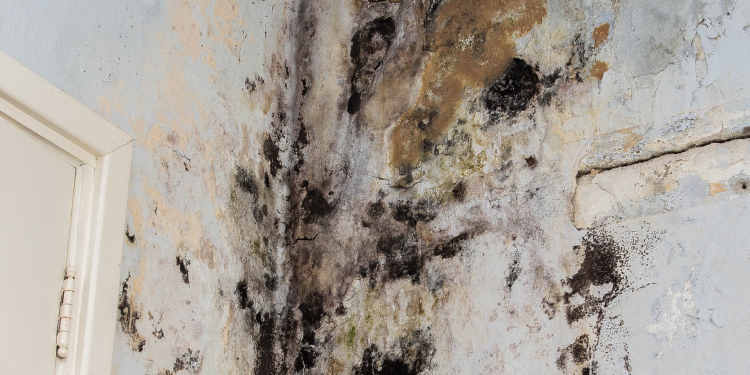
Higher indoor levels of these, especially when outdoor levels are low or zero, typically signal a moisture issue—often hidden.
“Finding Stachybotrys indoors almost always means water has been present for a while. It doesn’t grow in brief humidity spikes; it needs chronic moisture.” — Building Scientist
Local example: Black mold scare in a commercial space
A small medical clinic in St. Petersburg hired us for Toxic Mold Testing after staff noticed a musty smell in a records room. Lab results showed low overall spore counts but detected Stachybotrys and Chaetomium from surface samples behind baseboards.
A follow-up investigation found a slow plumbing leak in the wall. Because the clinic acted quickly, remediation was localized and contained, and operations were barely disrupted. Without understanding what those mold types signaled, the leak might have gone unnoticed for months.
CALLOUT: The type of mold often tells you more about the seriousness of the problem than the quantity alone.
Air Samples vs. Surface Samples vs. HVAC: What Each Tells You
Different sampling methods answer different questions. Misunderstanding this can lead to either false reassurance or unnecessary alarm.
Air samples
Best for assessing:
- Overall indoor air quality at a point in time
- Whether spores are becoming airborne from a source
- Comparisons between different rooms or zones
Limitations:
- Snapshot only; conditions can change day to day
- May miss hidden growth that isn’t currently releasing spores
Surface samples
Best for:
- Confirming if visible staining is mold
- Identifying specific mold types on materials
- Documenting contamination for remediation planning
Limitations:
- Only represent the exact spots sampled
- Don’t measure airborne exposure directly
HVAC mold inspection
In St. Petersburg, where air conditioning runs most of the year, an Air Quality Monitoring plan often includes looking at the HVAC system. HVAC Mold Inspection can reveal:
- Mold growth on coils or in drain pans
- Contaminated ductwork
- Issues with filtration or humidity control
Comparison table: Traditional vs. Modern Approach
| Approach Type | Traditional Focus | Modern, Best-Practice Focus in St. Petersburg |
|---|---|---|
| Sampling Strategy | One or two air samples | Integrated air, surface, and HVAC evaluation |
| Interpretation | Single “pass/fail” number | Patterns, mold types, and moisture data combined |
| Building Assessment | Limited visual walk-through | Detailed Mold Inspection Services with instruments |
| Follow-Up | Generic recommendations | Site-specific plan tied to building use and occupants |
| Local Climate Consideration | Often overlooked | Humidity, storm history, and building age factored in |
Local example: Hidden HVAC issue in a condo
A waterfront condo owner near Snell Isle complained of mild symptoms only when at home. General air samples showed slightly elevated Aspergillus/Penicillium indoors compared to outdoors, but no visible growth.
An HVAC-focused inspection revealed microbial growth in the air handler and on a dirty evaporator coil. Once cleaned and maintained properly, both air quality and symptoms improved, even though the condo itself had no visible mold.
CALLOUT: The right mix of air, surface, and HVAC evaluation often makes the difference between a vague report and a clear, actionable plan.
From Data to Decisions: When to Act, Monitor, or Re-Test
Once you understand your results, the next question is, “What do we actually do?” Not every finding calls for major remediation. Sometimes, smart monitoring and moisture control are enough.
When urgent action is needed
Consider immediate steps (including containment and professional remediation) when:
- Moisture-indicator molds (like Stachybotrys or Chaetomium) are present indoors
- Indoor counts of problematic molds are significantly higher than outdoors
- There’s visible mold covering more than about 10 square feet
- Occupants report significant health symptoms that correlate with the space
When monitoring and prevention may be enough
Monitoring is often appropriate when:
- Indoor levels are similar to or lower than outdoor levels
- Detected molds are primarily common outdoor types
- There’s no musty odor, visible growth, or moisture problem
- The building has a solid maintenance and humidity-control program
“The goal isn’t a zero-mold environment—that’s impossible. The goal is a building that doesn’t support amplified mold growth.” — Indoor Air Quality Specialist
Local cost and benefit comparison
Here’s a rough comparison based on typical St. Petersburg properties:
| Option | Typical Local Cost Range | When It Makes Sense | Benefit Level |
|---|---|---|---|
| Basic Assessment + Targeted Testing | $$ | Limited concern, no clear moisture issue | Clarifies if a problem exists |
| Comprehensive Testing + HVAC Check | $$$ | Ongoing complaints, older building, or history of leaks | High clarity, detailed plan |
| Full Remediation + Post-Testing | $$$$ | Confirmed active mold growth and moisture damage | Restores healthy conditions |
\Actual costs vary by property size and complexity.
Case study: Commercial re-test in downtown St. Pete
A co-working space near Beach Drive had an initial test from another provider that recommended full remediation. The owner, unsure, requested a second opinion.
Our more detailed Residential Mold Testing and Environmental Assessment showed localized issues in one small storage area, not throughout the building. With targeted remediation and follow-up testing, the owner saved thousands compared to the original broad recommendation.
CALLOUT: The purpose of testing is to guide smart decisions—not to automatically trigger the most expensive option.
Integrating Mold Results into Long-Term Building Health
Mold testing shouldn’t be a one-time panic reaction. Used correctly, it becomes part of a broader strategy for managing your property’s health, especially in a climate like St. Petersburg’s.
Building a proactive plan
A comprehensive plan often includes:
- Regular Environmental Management Services for air and moisture
- Scheduled HVAC inspections and filter changes
- Humidity control (ideally 40–60%) using dehumidification and smart thermostats
- Periodic targeted testing in higher-risk areas (basements, mechanical rooms, coastal exposures)
“Mold is more of a moisture-management issue than a cleaning issue. Control the moisture, and you control the mold.” — Facilities Manager, St. Petersburg Office Park
Local example: Portfolio management for a property owner
A St. Petersburg investor with several duplexes and small commercial buildings used to call only when tenants complained. That meant dealing with emergencies: leaks that went unnoticed, recurring mold in bathrooms, and higher remediation bills.
We helped them implement a routine Home Mold Detection and inspection schedule, combined with simple humidity and ventilation upgrades. Over three years:
- Emergency mold events dropped sharply
- Tenant complaints decreased
- Overall maintenance costs stabilized instead of spiking
Where an environmental consultant fits in
If you manage multiple properties or complex facilities, working with an Environmental Consultant Near Me can help you:
- Prioritize buildings with the highest risk
- Standardize response procedures when tests show concerns
- Integrate mold data with broader Environmental Consulting Services like VOCs, ventilation, and particulate matter
CALLOUT: Treat your mold test results as part of an ongoing building health record, not a one-off document to file away.
What This Means for Businesses in St. Petersburg, FL
St. Petersburg is a great place to live and work, but its climate is hard on buildings. High humidity, sea breezes, heavy afternoon rains, and the occasional tropical storm all create ideal conditions for mold—especially in older construction or buildings with marginal HVAC systems.
For businesses, that brings real stakes:
- Employee health and comfort
- Customer perception (no one likes a musty lobby)
- Liability and regulatory concerns
- Protection of inventory, records, and equipment
Understanding your mold test results clearly allows you to:
- Differentiate between a minor, manageable issue and a serious building problem
- Avoid overpaying for unnecessary remediation
- Take timely action when health or structural risks are present
- Communicate confidently with tenants, employees, and stakeholders
A tech startup in the EDGE District, a restaurant on 4th Street, and a medical practice near Bayfront may all receive very different lab reports, but they share the same need: a reliable, local partner who can translate those findings into practical steps.
With clear interpretation, your test results become a decision-making tool rather than a source of anxiety. In a city where buildings are constantly challenged by moisture and heat, that clarity is a real competitive advantage.
Frequently Asked Questions
Q: My report says “elevated mold levels.” Does that automatically mean I need remediation?
A: Not necessarily. “Elevated” is a relative term and should always be interpreted in context. A good report will compare indoor to outdoor levels and consider the types of mold present. If the elevation is mainly common outdoor molds and there’s no moisture problem, you may only need monitoring and preventive steps. When moisture-indicator molds or significantly higher indoor levels appear, targeted remediation is more likely. A thorough Mold Inspection combined with your results is the best way to decide what level of response is appropriate.
Q: How worried should I be about “black mold” on my report?
A: “Black mold” is a vague term often used for several dark-colored molds, including Stachybotrys. The presence of Stachybotrys or similar species typically indicates a long-term moisture issue, which needs to be addressed promptly. However, not all dark molds are highly toxic, and color alone doesn’t determine risk. What matters is the specific type, the extent of growth, building conditions, and occupant health. Black Mold Inspection by a qualified professional can clarify whether your particular situation calls for urgent remediation or a more measured response.
Q: Why are my indoor mold counts higher than outdoors even though I don’t see any mold?
A: Higher indoor counts can occur for several reasons, even without visible growth. Hidden sources inside walls, under flooring, or in HVAC components are common in humid areas like St. Petersburg. Disturbance from vacuuming, renovations, or moving stored items can also release spores into the air. Another factor is limited ventilation—tightly sealed buildings may trap spores indoors. A targeted Indoor Air Quality Testing and Mold Detection Services visit can help locate hidden sources using moisture meters, thermal imaging, and strategic surface sampling.
Q: Are DIY mold test kits reliable compared to professional testing?
A: DIY kits can sometimes indicate that mold is present, but they rarely provide enough context to make informed decisions. They often lack proper outdoor comparison samples and don’t include a professional visual inspection or moisture assessment. In St. Petersburg’s naturally mold-rich outdoor environment, that missing context can lead to false alarms or false reassurance. Professional Mold Detection CompaniesQ: How often should I test for mold in a commercial building?
A: Frequency depends on building use, history, and risk factors. For most St. Petersburg offices or retail spaces without prior issues, periodic Air Quality Monitoring every 1–3 years, plus testing after any major water event, is reasonable. Higher-risk facilities—such as healthcare, childcare, or buildings with past moisture problems—may benefit from more frequent assessments. Working with an Environmental Consulting Services provider can help you develop a schedule that balances risk, cost, and regulatory expectations.
Q: Can mold testing tell me if my health symptoms are caused by mold?
A: Mold testing can’t diagnose health conditions, but it can clarify whether your environment has conditions that might contribute to symptoms. If tests show elevated levels of certain molds, or clear signs of active growth, that information can be shared with your healthcare provider. A combined approach—medical evaluation plus a solid Home Mold Detection or Commercial Mold Testing assessment—gives the best picture. If symptoms improve when you’re away from a specific building and your test results show issues there, that correlation is important to discuss with both your doctor and your inspector.
Q: What should I look for in a professional mold testing company in St. Petersburg?
A: Look for certified inspectors with experience in our local climate and building styles. They should offer comprehensive Mold Inspection Services—not just sampling—and be willing to explain results in plain language. Independence from remediation contractors is a plus, as it reduces conflicts of interest. Ask about their process: Do they include outdoor controls, moisture mapping, and HVAC checks when appropriate? A strong provider of Environmental Assessment and testing will treat your results as a tool for decision-making, not a scare tactic.
Ready to Get Started?
Mold test results don’t have to be intimidating. With a clear explanation and a trusted local partner, they become a roadmap for protecting your building and everyone in it. In a place like St. Petersburg—where humidity, storms, and salt air constantly test your property—waiting until there’s a major problem is almost always more expensive than acting early.
If you’ve already received a report and aren’t sure what it means, or you suspect an issue and haven’t tested yet, this is the ideal moment to get clarity. Whether you need a one-time assessment, ongoing Indoor Air Quality Testing, or a second opinion on a remediation proposal, Tampa Bay Mold Testing can help you understand your options without pressure.
We’ll walk your property, review your results, and explain everything in straightforward terms so you can make decisions with confidence. No scare tactics—just honest, data-driven guidance tailored to St. Petersburg’s unique climate and your specific building.
About Tampa Bay Mold Testing
Tampa Bay Mold Testing is a locally focused, independent mold and indoor air quality firm serving St. Petersburg and the greater Tampa Bay area. Our certified inspectors specialize in detailed Mold Inspection, Professional Mold Testing, and comprehensive Environmental Assessment for both residential and commercial properties. With years of experience in Florida’s challenging climate, we combine building science, industry standards, and clear communication to help you understand your mold test results and protect your property.