How Professional Mold Inspection Protects Property Managers from False Claims—and Real Problems
By Joe Margherita, Tampa Bay Mold Testing
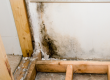
The email arrived on a Friday afternoon. A tenant in one of my client’s Tampa apartment complexes was claiming “toxic black mold” in their unit and demanding immediate lease termination—with no penalties and return of their security deposit. They attached photos of what appeared to be dark spots on a bathroom wall and threatened legal action if the property manager didn’t respond within 48 hours.
The property manager was in an impossible position. Ignore the complaint and risk a lawsuit if there’s actually a problem. Agree to the lease termination and set a precedent that any tenant can escape their obligations by claiming mold. Conduct an inspection that finds nothing and face accusations of covering up health hazards.
Sound familiar? In 25 years of conducting mold inspections across Florida, I’ve seen this scenario play out hundreds of times. And here’s what I’ve learned: property managers face unique challenges when it comes to mold—challenges that require a different approach than residential or commercial facility management.
The Tenant Mold Claim Playbook
Let me be direct: not every tenant mold complaint is fraudulent. Florida’s climate creates legitimate mold problems, and property managers have a legal and ethical obligation to address them. But after investigating hundreds of rental properties, I can tell you that tenant-reported mold claims fall into three distinct categories:
Category 1: Legitimate Problems (About 40%)
These are real mold problems caused by building defects, maintenance failures, or hidden water intrusion. The tenant didn’t cause it, isn’t exaggerating, and deserves proper remediation. Common sources: roof leaks, plumbing failures, HVAC condensation issues, building envelope problems.
Category 2: Tenant-Created Conditions (About 35%)
Mold growth caused by tenant behavior: failure to use exhaust fans, blocking air vents, keeping windows open in humid weather while running AC, not reporting leaks promptly, keeping indoor humidity excessively high, or poor housekeeping. The mold is real, but the cause is tenant-related.
Category 3: Opportunistic or Exaggerated Claims (About 25%)
Tenants who discovered they can break their lease by claiming mold. Sometimes there’s minor surface mold that poses no health risk. Sometimes there’s no mold at all—just dirt, mildew, or normal building materials discoloration. Often these complaints arise right after the tenant receives a lease violation notice or finds a better apartment.
The problem? You can’t know which category you’re dealing with without a professional assessment. And your response strategy must be different for each.
Why DIY Investigation Doesn’t Work
Many property managers make a critical mistake when faced with mold complaints: they send maintenance staff to “check it out.” Here’s why that approach fails:
You Have No Credible Documentation. When the tenant’s attorney demands evidence, “my maintenance guy said it was just dirt” doesn’t hold up. You need lab analysis from a certified independent laboratory, documentation from someone with no financial interest in the outcome, and a report that meets professional standards.
You Can’t Identify Hidden Problems. Mold often grows in places you can’t see—inside walls, above ceiling tiles, in HVAC systems, under flooring. Without moisture meters and thermal imaging equipment, you’re only seeing surface conditions. I’ve investigated units where visible mold was minimal but hidden contamination was extensive.
You Can’t Determine Cause. Knowing whether mold resulted from a building defect (your responsibility) or tenant behavior (their responsibility) requires expertise in building science, moisture dynamics, and HVAC function. This distinction matters enormously for liability and lease enforcement.
You Look Like You’re Covering Up. When your own employee investigates and finds “no problem,” tenants and their attorneys see it as biased. Third-party professional inspection eliminates the appearance of conflict of interest.
The Protection Professional Inspection Provides
Let me share what happened with that Friday afternoon tenant complaint I mentioned earlier. The property manager called me immediately, and I was on-site Monday morning. Here’s what I found:
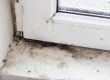
The dark spots the tenant photographed? Surface mildew on bathroom grout—common in Florida, easily cleaned, not a health hazard. My air quality testing showed spore counts well within normal ranges. But here’s what the tenant didn’t photograph: every window in the unit was open, the AC was running full blast, and bathroom exhaust fans hadn’t been used (evidenced by dust accumulation on the vents). The unit’s humidity level was 72%—far above the 50-55% target for Florida rentals.
My report documented all of this with photos, lab results, and moisture readings. It showed the tenant had created conditions conducive to mildew growth through improper ventilation practices. When presented with the professional assessment, the tenant’s attorney dropped the complaint within 48 hours. The tenant completed their lease term.
Total cost to the property manager: $450 for the inspection. Potential cost without documentation: months of legal fees, possible settlement payment, lost rent during vacancy, unit turnover costs, and damaged reputation.
But here’s the other side: I’ve also investigated units where tenant complaints were 100% legitimate. Hidden plumbing leaks. Failed HVAC condensate drains. Roof leaks that maintenance had “fixed” three times but never properly addressed. In these cases, professional inspection protects property managers by:
Identifying the real source of the problem so it can be properly fixed (not just patched), documenting the extent of contamination so remediation is adequate, providing a defensible timeline showing the property manager responded appropriately once notified, and preventing the problem from spreading to adjacent units.
The Florida Factor: Why Climate Makes This Worse
Property managers in Florida face mold challenges that managers in drier climates simply don’t encounter. Our combination of heat, humidity, and intense weather events creates perfect conditions for mold growth—and perfect conditions for tenant complaints.
During the summer months, outdoor humidity regularly exceeds 90%. If tenants open windows while running air conditioning, or if AC systems can’t keep up with cooling loads, indoor humidity can climb to levels that support mold growth even without any water intrusion event. I’ve found active mold growth in units with no leaks, no building defects, and no maintenance failures—just inadequate humidity control combined with tenant behaviors.
Hurricane season compounds the problem. After major storms, I’m called to dozens of properties to assess water intrusion. Some damage is obvious—flooded units, roof leaks, broken windows. But much of it is hidden: wind-driven rain forced into wall cavities, compromised building envelope allowing moisture penetration, saturated insulation that won’t dry without intervention.
The challenge for property managers is distinguishing between normal Florida humidity-related surface mildew (which tenants are often responsible for managing through proper ventilation) and actual mold problems caused by building issues (which property managers must address). Without professional assessment, this distinction is nearly impossible to make with confidence.
When to Call for a Professional Inspection
After 25 years and hundreds of property management clients, here’s my guidance on when professional mold inspection is worth the investment:
Immediate Inspection Needed:
• Tenant claims health symptoms related to mold • Tenant threatens legal action or lease termination • Visible mold growth exceeding 10 square feet • Recurring mold problems in the same unit • Water intrusion event affecting multiple units • Post-hurricane or major storm damage • Before beginning any mold remediation project • After remediation completion (clearance testing)
Strongly Recommended:
• Unit turnover in ground-floor or historically problematic units • Persistent musty odors without visible mold • Units adjacent to known mold problems • Before purchasing or taking over management of a property • Annually for high-risk buildings (older construction, history of water issues)
Probably Not Necessary:
• Minor surface mildew on bathroom grout or tile (can be cleaned by tenant) • Condensation on windows during humid weather (normal in Florida) • Tenant complaint with no visible mold or odor • Recently completed professional inspection showing no problems
What Professional Mold Inspection Actually Includes
Many property managers have never worked with a professional mold inspector and don’t know what they’re paying for. Here’s what a comprehensive inspection includes:
Visual Assessment: Systematic examination of all accessible areas including walls, ceilings, floors, HVAC system, plumbing fixtures, windows, and any areas where moisture is likely to accumulate. Documentation with detailed photos.
Moisture Mapping: Using moisture meters to identify areas with elevated moisture content—including materials that appear dry visually but retain moisture internally. This reveals hidden problems and identifies the extent of water damage.
Thermal Imaging: Infrared cameras detect temperature variations that indicate moisture intrusion, air leaks, insulation problems, or active water leaks behind walls and ceilings. This non-invasive technology identifies issues without demolition.
Air Quality Testing: Collection of air samples using calibrated equipment. Samples are analyzed by certified independent laboratories to identify mold species present and quantify spore concentrations. Results are compared to outdoor baseline samples to determine if indoor levels are elevated.
Surface Sampling: When visible growth is present, samples are collected and analyzed to identify specific mold species. This information guides remediation decisions and health risk assessment.
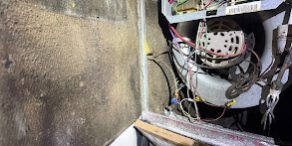
HVAC System Inspection: Many mold problems originate in air conditioning systems. Professional inspection includes opening air handlers to inspect cooling coils, drain pans, and interior surfaces—areas maintenance staff typically don’t examine.
Source Identification: Determining what caused the mold growth: building defect, maintenance failure, tenant behavior, or environmental factors. This is critical for determining responsibility and preventing recurrence.
Detailed Written Report: Comprehensive documentation including findings, lab results, photos, moisture readings, and specific recommendations. This report is admissible in legal proceedings and demonstrates due diligence.
The Documentation That Protects You
Property managers often ask me: “What’s the real value of professional inspection?” The answer is simple: documentation that holds up under scrutiny.
When a tenant’s attorney demands evidence, when a judge reviews your response to a complaint, when an insurance company investigates a claim, or when a prospective tenant’s lawyer requests disclosure of known mold problems, you need documentation that demonstrates:
1. You took the complaint seriously and responded promptly 2. You hired qualified professionals, not just internal staff 3. Testing was conducted by certified independent laboratories 4. Assessment was thorough and systematic 5. Conclusions were based on objective data, not opinion 6. Recommendations were followed (or reasons documented if not)
This documentation protects you in multiple ways:
Tenant Disputes: When tenants claim you ignored mold problems or failed to respond appropriately, your professional inspection report shows exactly what you did, when you did it, and why.
Legal Defense: If sued, your documentation demonstrates you met your duty of care. You didn’t ignore complaints, you didn’t cut corners, you relied on expert guidance.
Insurance Claims: Professional assessment helps establish cause and extent of damage, supports insurance claims, and verifies that remediation was necessary and appropriate.
Property Disclosure: When selling or refinancing, you can disclose that professional inspections were conducted and issues were addressed properly. This protects against future liability for undisclosed conditions.
Contractor Oversight: Professional assessment before remediation ensures contractors don’t over-bid or under-deliver. Post-remediation clearance testing verifies that work was completed properly.
The Cost-Benefit Reality
Let’s talk about the economics that property managers care about. Professional mold inspection costs $450-650 for a typical residential unit. Here’s what that investment prevents:
Legal Defense: Even a straightforward landlord-tenant lawsuit costs $5,000-15,000 in legal fees. Complex cases with expert witnesses can exceed $50,000. A $450 inspection that prevents litigation has an ROI of 1,000% or more.
Improper Lease Termination: If a tenant breaks their lease claiming uninhabitable conditions and you can’t prove otherwise, you lose remaining rent, turnover costs, and potentially security deposit return. For a unit renting at $1,500/month with 8 months remaining, that’s $12,000 in lost revenue plus vacancy costs.
Unnecessary Remediation: Without proper assessment, contractors may over-bid remediation projects. I’ve seen $15,000 mold remediation proposals for problems that required only $2,000 in targeted repairs. Professional inspection ensures you’re only paying for necessary work.
Spreading Contamination: Small mold problems that aren’t properly identified and addressed can spread to adjacent units. What started as a $450 inspection and $1,500 repair became a $25,000 multi-unit remediation project.
Reputation Damage: In the age of online reviews, tenants who feel their mold complaints were ignored will broadcast that experience. Professional documentation shows prospective tenants and their attorneys that you take health and safety seriously.
The property managers I work with most successfully don’t view professional inspection as an expense—they view it as insurance. It’s the cost of protecting their property, their reputation, their relationships with owners, and their legal position.
What to Look for in a Mold Inspector
Not all mold inspectors are created equal. Here’s what property managers should verify before hiring someone:
Proper Certifications: Look for CIE (Certified Indoor Environmentalist), CMI (Certified Mold Inspector), or CIEC (Certified Indoor Environmental Consultant) credentials. These require training, testing, and ongoing education.
Professional Memberships: NORMI (National Organization of Remediators and Mold Inspectors), IAQA (Indoor Air Quality Association), or similar organizations demonstrate commitment to professional standards.
Independence: Never hire a mold inspector who also performs remediation. This creates an obvious conflict of interest—they’re incentivized to find problems that require expensive cleanup. Use separate companies for testing and remediation.
Laboratory Relationships: Samples should be analyzed by independent, accredited laboratories—not labs owned by the inspection company. Look for AIHA (American Industrial Hygiene Association) or EMLAP (Environmental Microbiology Laboratory Accreditation Program) accredited labs.
Experience with Rental Properties: Residential mold inspection is different from rental property inspection. You need someone who understands landlord-tenant issues, can document tenant-caused versus building-caused problems, and has experience with legal proceedings.
Comprehensive Reporting: Ask to see sample reports. They should include detailed findings, clear photos, laboratory results with interpretation, moisture readings, source identification, and specific recommendations. Avoid inspectors who provide only lab results without context.
Appropriate Equipment: Professional inspectors should have moisture meters, thermal imaging cameras, particle counters, and proper sampling equipment. If they show up with just a flashlight and camera, that’s not a professional inspection.
Proactive Strategies That Reduce Mold Complaints
The best mold complaint is the one that never happens. Here are strategies I’ve seen work for property managers:
Move-In Documentation: Consider professional inspection of high-risk units (ground floor, history of water problems, older construction) before new tenants move in. Document that the unit was mold-free at move-in. This prevents tenants from claiming pre-existing conditions.
Tenant Education: Provide written guidance on preventing mold: use exhaust fans during showers, don’t block AC vents, keep windows closed when AC is running, report leaks immediately, maintain indoor humidity below 55%. Include this in lease agreements and move-in packets.
Rapid Response Protocol: When tenants report water leaks or moisture problems, respond within 24 hours. Document the response. Fix the source and verify materials are dry with moisture meters. This prevents small issues from becoming mold problems.
HVAC Maintenance: Many mold problems originate in air conditioning systems. Include professional HVAC inspection as part of routine maintenance—not just filter changes, but actually opening air handlers and checking for moisture, mold, and proper drainage.
High-Risk Unit Monitoring: Units with history of water problems, ground-floor units, units near pools or irrigation, and units in older buildings warrant more frequent inspection. Annual or semi-annual professional assessment can catch problems before tenants notice them.
Post-Storm Assessment: After hurricanes or major storms, conduct systematic inspection of all units for water intrusion. Address problems immediately before mold develops. This is especially critical in Florida where hurricane season is annual.
Clear Lease Language: Your lease should specify tenant responsibilities for mold prevention (using ventilation, reporting water problems promptly, not creating excessive humidity) and your responsibilities for addressing building-related moisture problems. This establishes expectations and liability.
The Bottom Line for Property Managers
After 25 years of working with property managers across Florida, here’s what I know: mold complaints are inevitable. Florida’s climate guarantees you’ll face them. Tenant behavior guarantees some will be unjustified. Building age and maintenance realities guarantee some will be legitimate.
The question isn’t whether you’ll deal with mold issues—it’s whether you’ll deal with them proactively with professional documentation, or reactively when a tenant’s attorney is demanding discovery.
Professional mold inspection isn’t about finding problems—it’s about knowing the truth. Sometimes the truth is that the tenant’s complaint is legitimate and you need to fix something. Sometimes the truth is that the tenant created the problem through their own behavior. Sometimes the truth is that there’s no significant problem at all.
But in every case, having that truth documented by an independent professional protects you legally, financially, and reputationally.
The property managers who call me before problems escalate—who view professional inspection as routine risk management rather than emergency response—are the ones who sleep well at night. They’re not wondering if that tenant complaint is going to turn into a lawsuit. They’re not worried about whether their maintenance staff missed something important. They’re not concerned about setting precedents that encourage frivolous mold claims.
They know exactly what’s happening in their properties, they have documentation that proves it, and they’re managing risk rather than responding to crises.
That’s not just good property management. It’s smart business.
—
About the Author
Joe Margherita is the owner of Tampa Bay Mold Testing and a Certified Indoor Environmentalist (CIE) with 25 years of experience conducting mold inspections on residential and commercial properties across Florida. A licensed real estate and CAM instructor, he specializes in helping property managers navigate mold complaints, tenant disputes, and indoor air quality issues. He holds professional memberships with NORMI, InterNACHI, and IICRC.
Contact Tampa Bay Mold Testing:
Phone: 813-365-1994
Web: www.tampabaymoldtesting.com
Email: info@tampabaymoldtesting.com